Commercial food prep facilities near Falls Park on the Reedy and Main Street corridors require deliberate structural isolation rather than indiscriminate pesticide applications. Commercial kitchen vector remediation in…
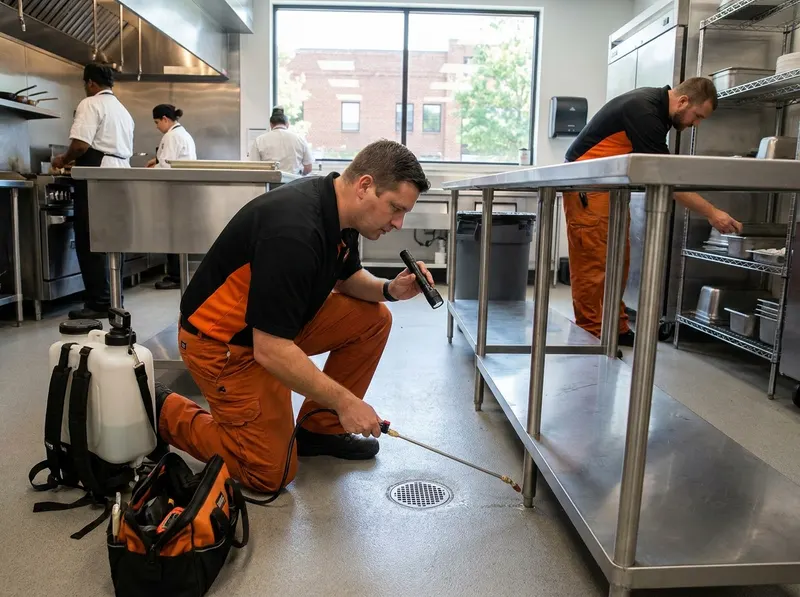
Commercial food prep facilities near Falls Park on the Reedy and Main Street corridors require deliberate structural isolation rather than indiscriminate pesticide applications. Commercial kitchen vector remediation in Greenville focuses on the micro-environments where food grease, moisture, and organics settle into hidden breeding zones. IronCove Pest Protection isolates transmission lines along moisture zones, ensuring high-temperature wash areas, stainless table anchors, and floor sinks remain inhospitable to pests. Facilities regulated under SCDHEC sanitation standards must meet stringent critical control point thresholds, making mechanical exclusion a superior biological defense over perpetual topical sprays.
Floor drains represent the single highest vector entry failure in commercial culinary environments. IronCove Pest Protection applies non-volatile bio-enzymes to break down the biofilm feeding phorid and drain flies, adhering to structural sanitization metrics established by the CDC and the U.S. FDA Food Code. Mechanical barriers and stainless steel mesh screening secure electrical conduit penetrations, plumbing chases, and drop-ceiling voids from Norway rats and house mice navigating grease traps along the Swamp Rabbit Trail commercial sector. Technicians prioritize high-grade physical barriers vetted against standards by the U.S. EPA for pesticide-minimized commercial establishments.
In older infrastructure typical of historic food operations along Augusta Road and North Main, settling foundations generate micro-voids between quarry tile floors and FRP wall panels. IronCove Pest Protection injects elastomeric seals and heavy-gauge copper mesh into these junction expansion gaps to intercept German cockroach nesting bands. Facilities adhere to structural exclusion guidelines outlined by the Regional IPM Centers, the National Pest Management Association, and workplace parameters cataloged by the Occupational Safety and Health Administration. Addressing the physical structure ensures regulatory inspection compliance under clean baseline operations overseen by S.C. Department of Agriculture commercial food protocols and safe waste disposal metrics aligned with the Greenville County waste authorities.
Facility managers execute remediation through an exact protocol sequence. In Step 1, IronCove Pest Protection measures drain biofilms, moisture differentials, and tile substrate separations. In Step 2, non-chemical microbial slurries dissolve internal waste layers without abrasive caustic compounds. In Step 3, technicians install food-grade, physical silicone seals along stainless flashing and base cove junctions. In Step 4, pest entryways through mechanical wall sleeves are blocked using solid metallic barriers. In Step 5, verifiable bait matrix monitoring points record insect containment levels across a 14-day observation period.
Every job gets a firm, written price after an on-site visit.
Tell us about your commercial kitchen vector remediation job in Greenville and we'll send a clear, written quote, usually the same day.
 IronCove Pest Protection